
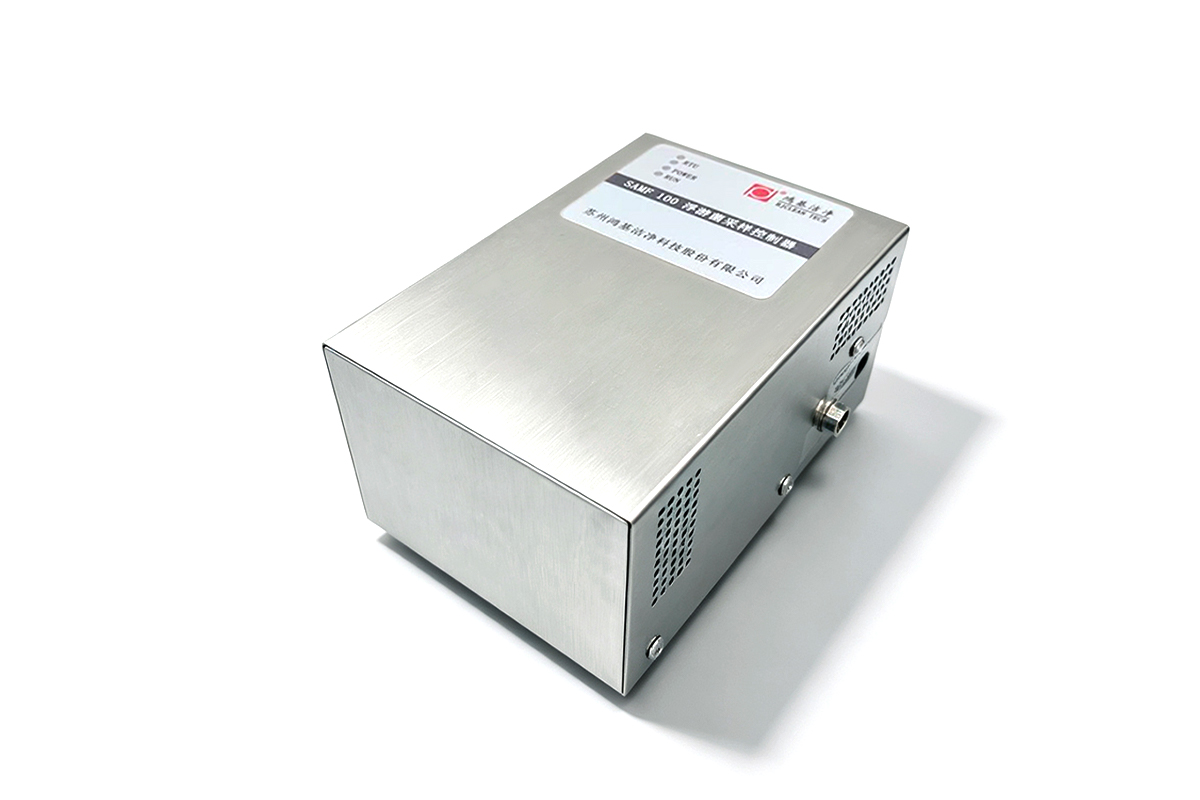
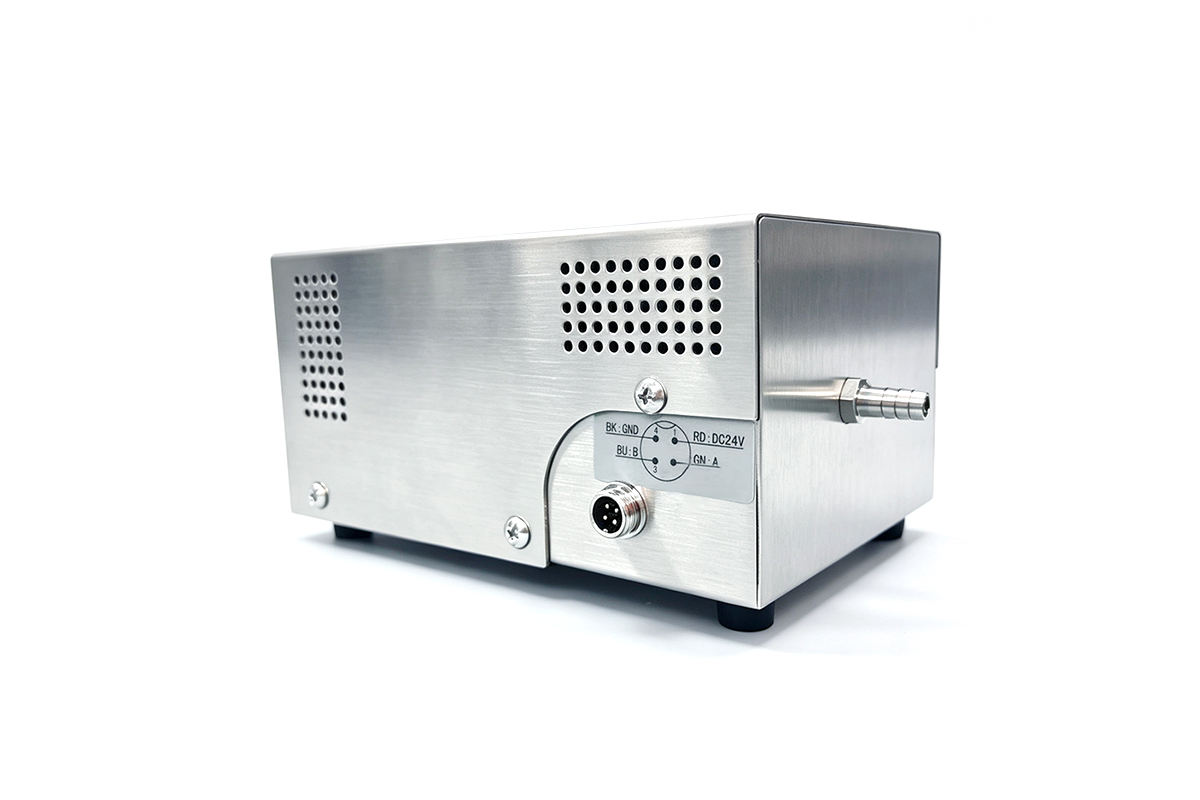
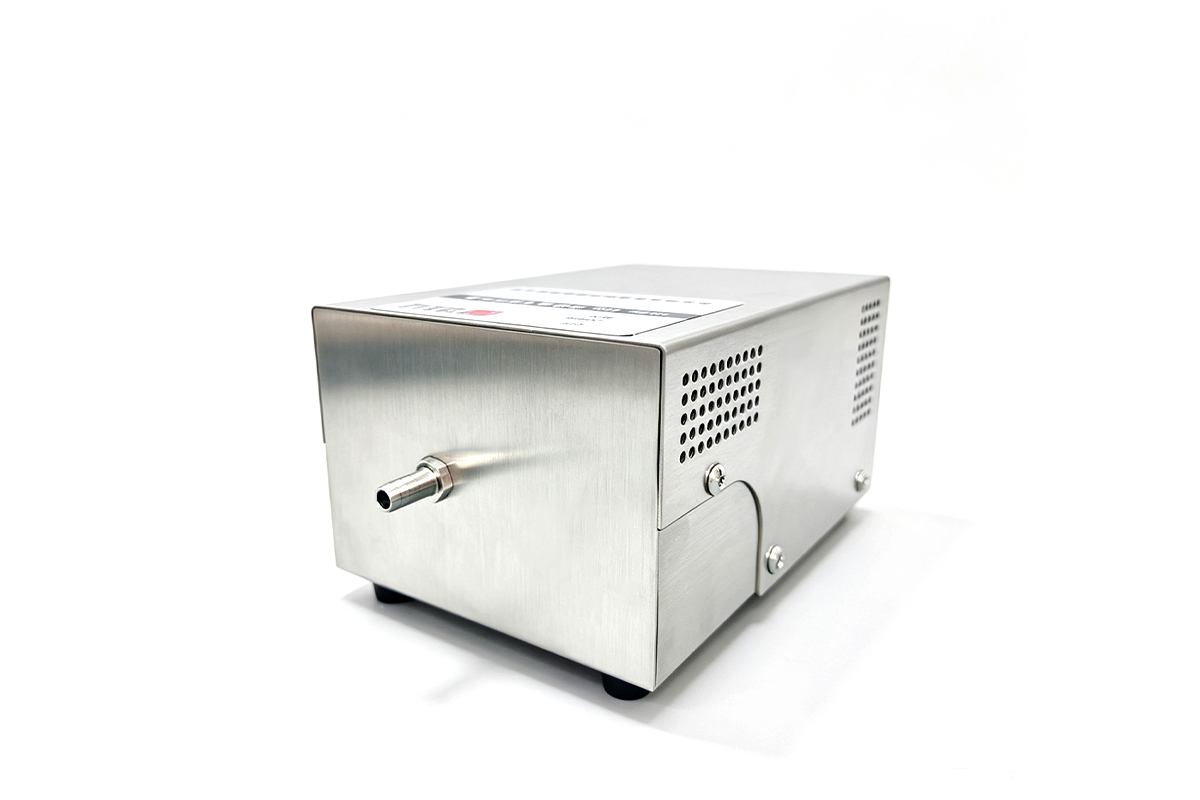
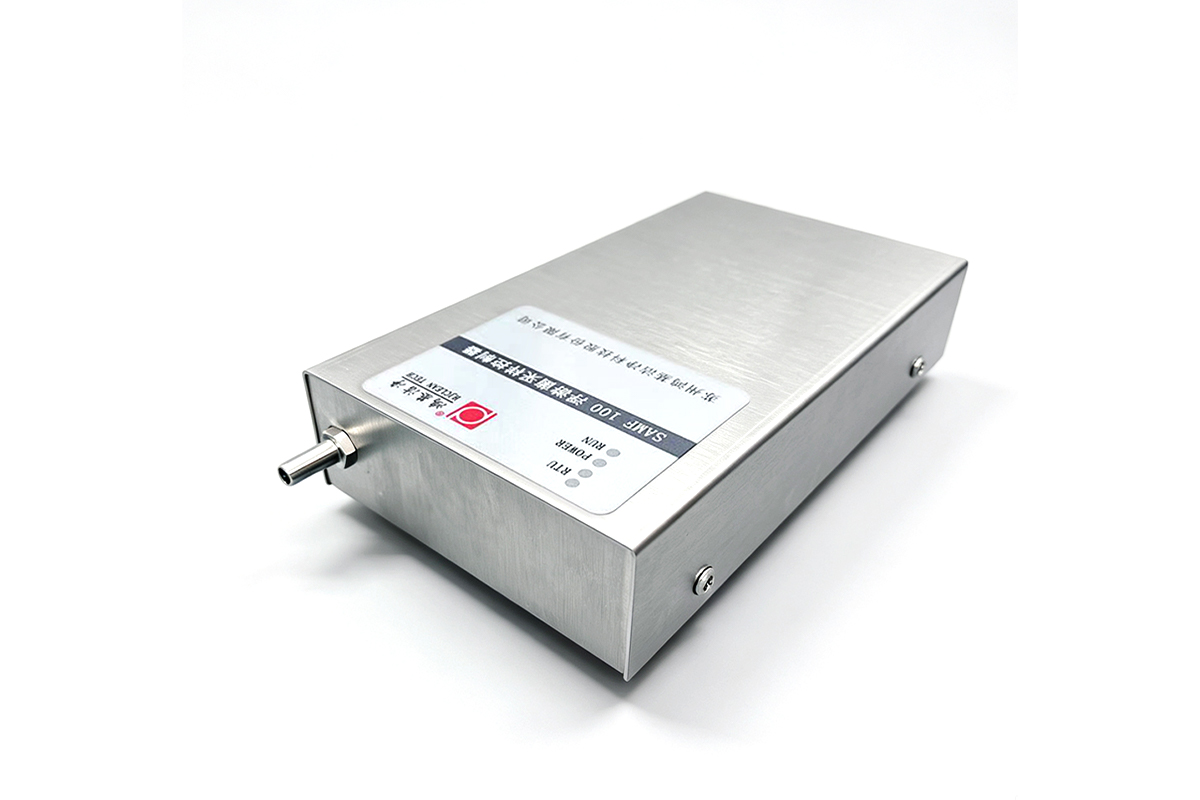
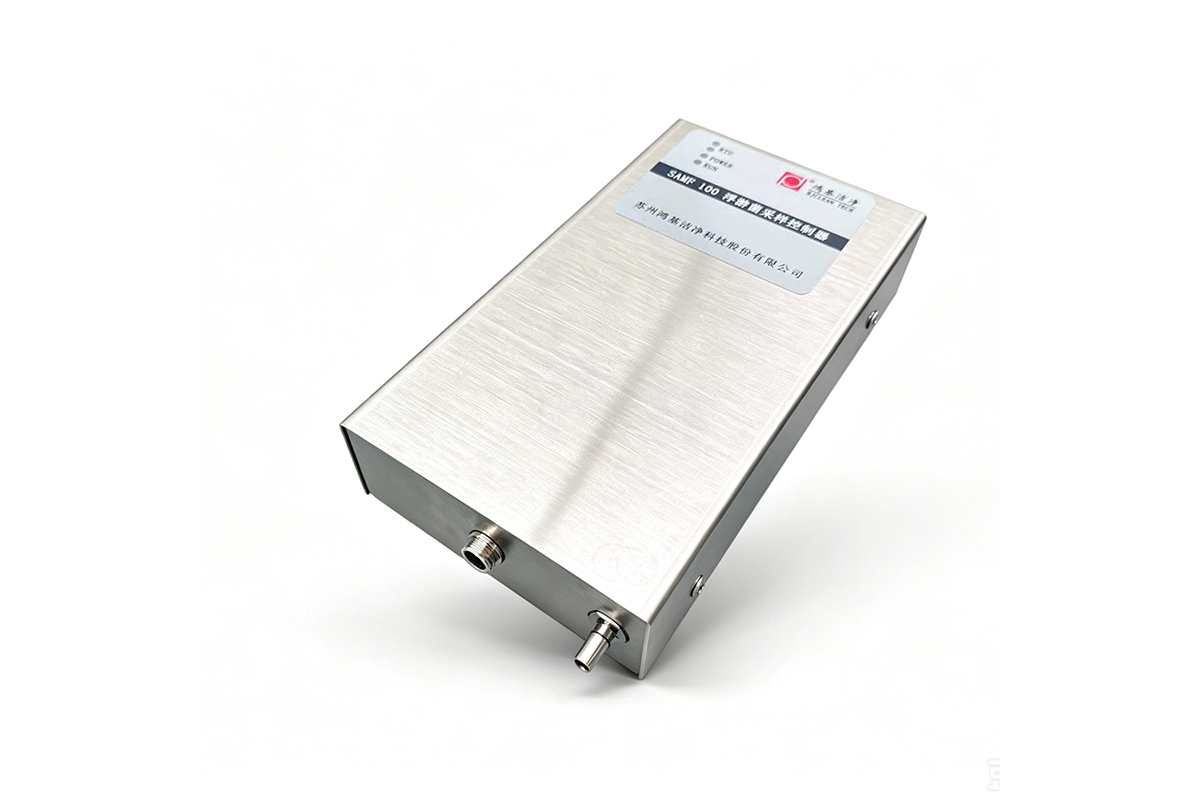
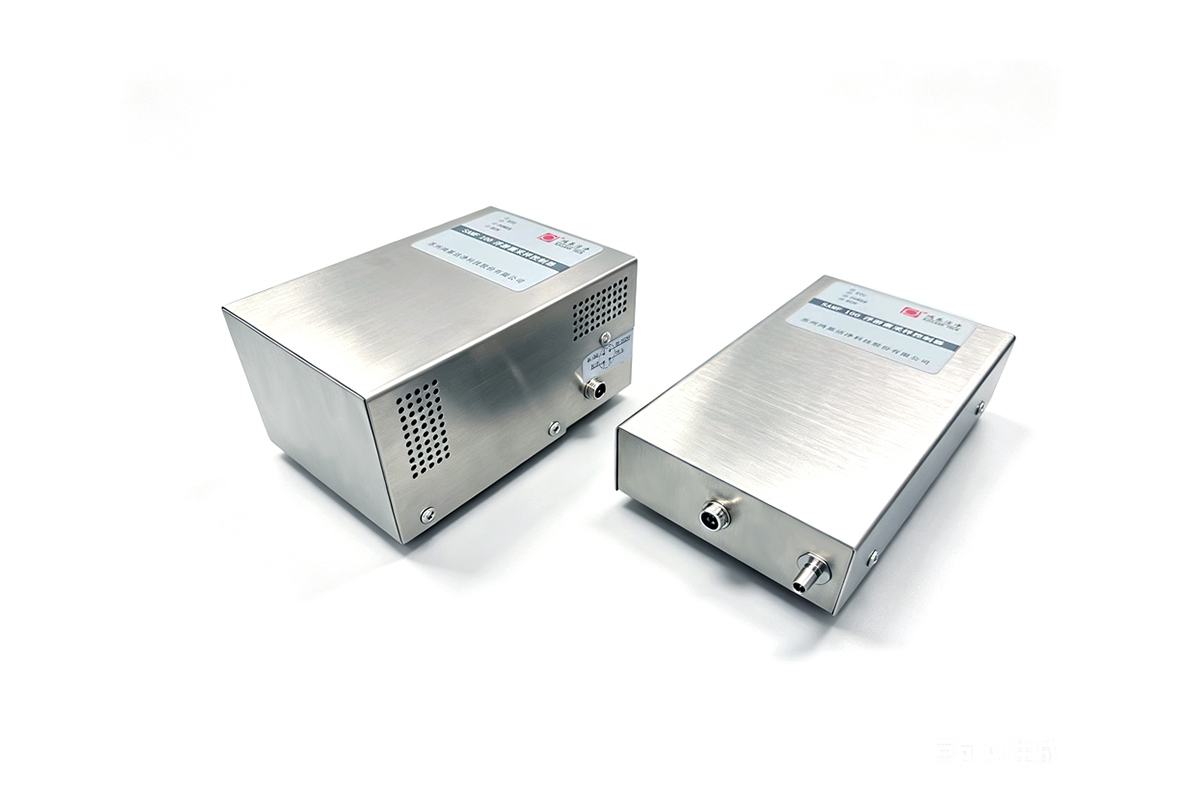
SAMF100 Airborne Bacteria Controller
- This equipment serves as the core intelligent control unit for distributed on-line environmental monitoring in cleanrooms. The whole system consists of remote suspended particle detection terminals, real-time viable airborne bacteria monitoring probes, centralized main control unit, air supply system and upper computer configuration monitoring software. It realizes unattended 24/7 continuous on-line monitoring for suspended dust particles and viable airborne microorganisms (bacteria, fungi, spores) in the air of clean areas, together with centralized management of critical cleanroom environmental parameters including temperature & humidity, differential pressure and laminar airflow velocity.
Product Description
1. Product Overview
1.1 Definition
1.2 System Composition
-
Front-end Data Acquisition Unit
- On-line particle sensor: Adopts laser light scattering principle; standard flow rates of 2.83 L/min and 28.3 L/min, measuring typical particle sizes of 0.3 μm, 0.5 μm, 1.0 μm and 5.0 μm.
- On-line airborne bacteria monitoring probe: Two mainstream technical solutions are available: ① Real-time biological particle identification via laser-induced fluorescence; ② Negative pressure active sampling unit for airborne microorganism collection.
- Auxiliary environmental sensors: Differential pressure, temperature & humidity, laminar airflow velocity sensors.
- Central Control Host (Core Controller)
It functions as the scheduling hub of the whole system, performing closed-loop constant pressure control of sampling pipeline flow, sampling sequence scheduling, local data caching, logical judgment, local audible & visual alarming, protocol data transmission and vacuum pump linkage control. It also features anti-backflow protection for pipelines.
- Back-end Monitoring Platform Software
It supports centralized data storage, trend analysis, report export, multi-level authority management, audit trail and remote alarm push, and can be seamlessly connected to factory MES and FMCS building automation systems.
1.3 Typical Application Scenarios
- Pharmaceutical industry: Mandatory dynamic monitoring for high-risk Grade A clean areas such as aseptic filling, lyophilization, capping and isolator systems, complying with Annex 1 of EU GMP and China GMP 2010 edition requirements for dynamic monitoring.
- Semiconductor wafer fabrication and chip packaging clean workshops.
- Aseptic assembly workshops for medical devices, operating rooms, biological laboratories and IVD reagent production workshops.
- Lithium battery manufacturing, aseptic food filling and other high-cleanliness production workshops.
1.4 Applicable Standards
2. Core Technical Features
2.1 Advantages of Particle Counting Module
- High-precision Laser Scattering Detection
Equipped with high-stability solid-state laser light source; particles of different sizes are distinguished accurately based on Mie light scattering theory. Built-in optical self-calibration algorithm effectively reduces zero drift; background count is less than 1 particle per 5 minutes under idle condition, with repeatability error ≤ ±10% FS during long-term continuous operation to avoid signal distortion caused by long-term running drift.
- Professional Isokinetic Sampling Air Circuit Design
Adopts 316L stainless steel isokinetic sampling nozzles and smooth inner-wall coated clean sampling pipelines. The sampling airflow velocity matches the on-site laminar flow speed strictly to guarantee accurate sampling results. Pipelines feature smooth inner walls without dead corners and dust accumulation; surface can be wiped and disinfected in-situ to meet hygienic requirements of cleanrooms.
- Intelligent Closed-loop Flow Control for Multi-point Sampling
The controller uniformly manages multiple sampling points in the workshop, equipped with high-precision flow sensors and electric regulating valves for real-time pressure and flow stabilization. Redundant dual vacuum pumps (one working, one standby) are configured for automatic switchover upon failure; one-way check valves prevent air backflow and contamination of probes and pipelines during shutdown.
- Hardware Protection Adapted to Cleanroom Working Conditions
The whole unit adopts SUS304/SUS316L stainless steel housing with brushed finish free of dust accumulation dead corners, resistant to disinfection by alcohol and hydrogen peroxide aerosol spraying. It adopts safe DC24V power supply, supporting customized models for explosion-proof clean workshops.
2.2 Two Main Technical Routes for Airborne Bacteria MonitoringRoute 1: Laser-induced Fluorescence Real-time On-line Airborne Bacteria Monitor (BAMS)
- Working Principle:
Viable microorganisms contain endogenous NADH coenzyme which generates characteristic fluorescence when excited by specific ultraviolet laser; inert dust particles produce no fluorescent signals. The controller differentiates viable microbial particles from ordinary dust via photoelectric signals and issues real-time early warnings within seconds, eliminating the 2–7 day incubation waiting period required by traditional agar plate culture.
- Key Advantages:
- 24/7 uninterrupted continuous monitoring with zero consumables; no frequent replacement of culture dishes required, drastically lowering secondary contamination risks brought by frequent personnel access to Grade A areas.
- Pollution locations and occurrence time can be pinpointed instantly once over-limit occurs, facilitating trace analysis of microbial fluctuations caused by operators, equipment or airflow disturbance.
- Optional detachable gelatin filter membrane can automatically intercept microorganisms upon alarm; subsequent laboratory culture and strain identification can be conducted to satisfy traceability requirements specified in EU GMP Annex 1.
Route 2: Negative Pressure Active Sampling Airborne Bacteria Controller
- Working Principle:
The controller drives vacuum pumps at preset flow rates (50 L/min, 100 L/min) to draw air and impact microbial particles onto agar culture medium for standard airborne bacteria sampling. It precisely controls sampling duration, flow rate and sampling schedule.
- Advantages:
Fully consistent with national standard manual airborne bacteria sampling methods; acquired data can be directly applied to official GMP acceptance verification. The system automatically records sampling time, location and flow rate with complete data traceability.
2.3 Intelligent Management Functions of Central Controller
- Local Data Backup & Cache Protection
Mass built-in flash memory stores tens of thousands of monitoring data locally in case of communication interruption or server downtime; automatic resume transmission after network recovery ensures zero data loss and complies with data integrity requirements.
- Hierarchical Intelligent Alarm Interlock System
Three-level thresholds (warning limit, action limit and correction limit) are customizable; local audible & visual on-site alarms and central control room centralized alarms are supported, alongside remote notifications via SMS, email and mobile APP. The system can interlock with fresh air units, access control systems and purification air handlers for automatic regulation.
- Standard Multi-protocol Communication Compatibility
Natively supports Modbus RTU/TCP, Ethernet, WiFi and LoRa wireless networking, enabling seamless connection with upper monitoring systems, MES, SCADA and building automation systems; customized secondary development docking with factory digital platforms is available.
-
Full-lifecycle Self-inspection for Operation & MaintenanceThe controller monitors operating status of vacuum pumps, air circuit pressure, laser service life, sensor faults and pipeline blockage in real time. Fault logs are automatically recorded and maintenance reminders are triggered; remote online diagnosis is supported.
2.4 Compliance-oriented Highlights of Supporting Software
- Full-process Audit Trail & Electronic Signature
All operations including login, parameter modification, threshold adjustment, alarm confirmation and data export are recorded with tamper-proof logs. Multi-level account permission management (administrator, operator, viewer) paired with electronic signatures fully satisfies the paperless compliance requirements of FDA 21 CFR Part 11.
- Big Data Trend Analysis & Automatic Report Generation
Automatically generates daily, weekly and monthly cleanliness trend curves, counting peak values, average values and over-limit frequency, and produces standard GMP acceptance reports automatically; cloud backup and off-site disaster recovery of historical data are supported.
- Modular Flexible Capacity Expansion
Only additional front-end probes need to be connected to the controller for newly added monitoring points without overall system reconstruction, adapting to phased construction and upgrading of cleanroom plants.
2.5 Application Values
- Replace traditional intermittent manual sampling, reduce frequent personnel entry into Grade A areas and cut human-induced contamination fundamentally.
- Capture abnormal contamination events in real time without waiting for culture results, allowing timely intervention during production to avoid batch product contamination and scrappage losses.
- Complete supporting documents for FAT/SAT acceptance and four-stage validation (4Q) are provided to support direct GMP audit after delivery.
- Low operation and maintenance cost; fluorescence-type models require almost no consumables, significantly reducing expenditure on culture media and labor sampling workload.
3. Reference Key Technical Specifications
- Measurable particle sizes: 0.3 μm, 0.5 μm, 1 μm, 5 μm; sampling flow rates: 2.83 L/min, 28.3 L/min
- Fluorescence airborne bacteria sampling flow rate: 2.83 L/min; response time < 1 second with ultra-low background noise
- Controller power supply: DC24V; operating temperature: 0 ~ 40 ℃
- Single controller load capacity: 8 ~ 32 sampling points with flexible expansion
- Local data storage capacity: ≥ 1,000,000 historical records for long-term storage
FAQ
Q1: What is the MOQ for the online particle monitoring system?
A: MOQ starts from one monitoring point. Configurations can be made according to the actual point‑quantity requirements of your project. Please contact our sales team for confirmation.
Q2: What is the lead time for the online particle monitoring system?
A: The production lead time ranges from 25 to 45 working days, depending on customization complexity including functions, software and communication protocols. In case of supply fluctuation of core components, the revised lead time will be communicated and confirmed with customers in advance in written form.
Q3: Do you support OEM customization and customer‑logo marking?
A: OEM / ODM customization is available. We can adjust instrument nameplates, operation interfaces, output protocols and software functions per customer requirements. Customer LOGO and brand nameplates can be printed. Certain customizations may incur costs for program modification and nameplate mould opening. Please provide detailed technical specifications. Our technical department will evaluate and issue solutions and quotations subject to mutually confirmed documents.
Q4: What industry standards does it comply with and what certifications are available?
A: It complies with ISO14644 cleanroom standards and GMP specifications, meeting validation requirements for pharmaceutical, electronics and biological laboratory applications. Our company holds ISO9001 quality management system certification and CE certification, and is a member unit of China Cleanroom Standards Committee. Factory test reports are supplied upon delivery. Third‑party metrological calibration can be arranged upon customer request. Please contact sales for relevant product certification documents.
Q5: What is the after‑sales warranty period?
A: The standard warranty for the complete detecting instrument is 1‑year. Free spare‑part replacement and remote technical support are provided for non‑human‑induced failures within the warranty period. Service sites are available across China, and instrument operation training can be provided. Lifetime technical support, paid repair and metrological maintenance are offered after warranty expiration. Extended‑warranty packages are optional.